
Mediastinal Hematoma
Mediastinal Hematoma
David Ray Velez, MD
Table of Contents
Background
Definition: The Presence of Blood within the Mediastinum as it Dissects Fascial Planes
Small Venous Injury is the Most Common Cause in Blunt Thoracic Trauma
Causes
- Penetrating Injury
- Aortic Injury
- Mediastinal Vascular Injury (Internal Thoracics, Intercostals)
- Sternal Fracture
- Rib Fracture
- Vertebral Fracture
- Esophageal Injury
- Misplaced Central Venous Catheters
Can Also Be Caused by Nontraumatic or Iatrogenic Causes: Non-Traumatic Aortic Rupture, Secondary Hemorrhage into Associated Masses, Valsalva Maneuver, Sever Vomiting, etc.
Bleeding Disorders and Anticoagulation Can Increase the Risk
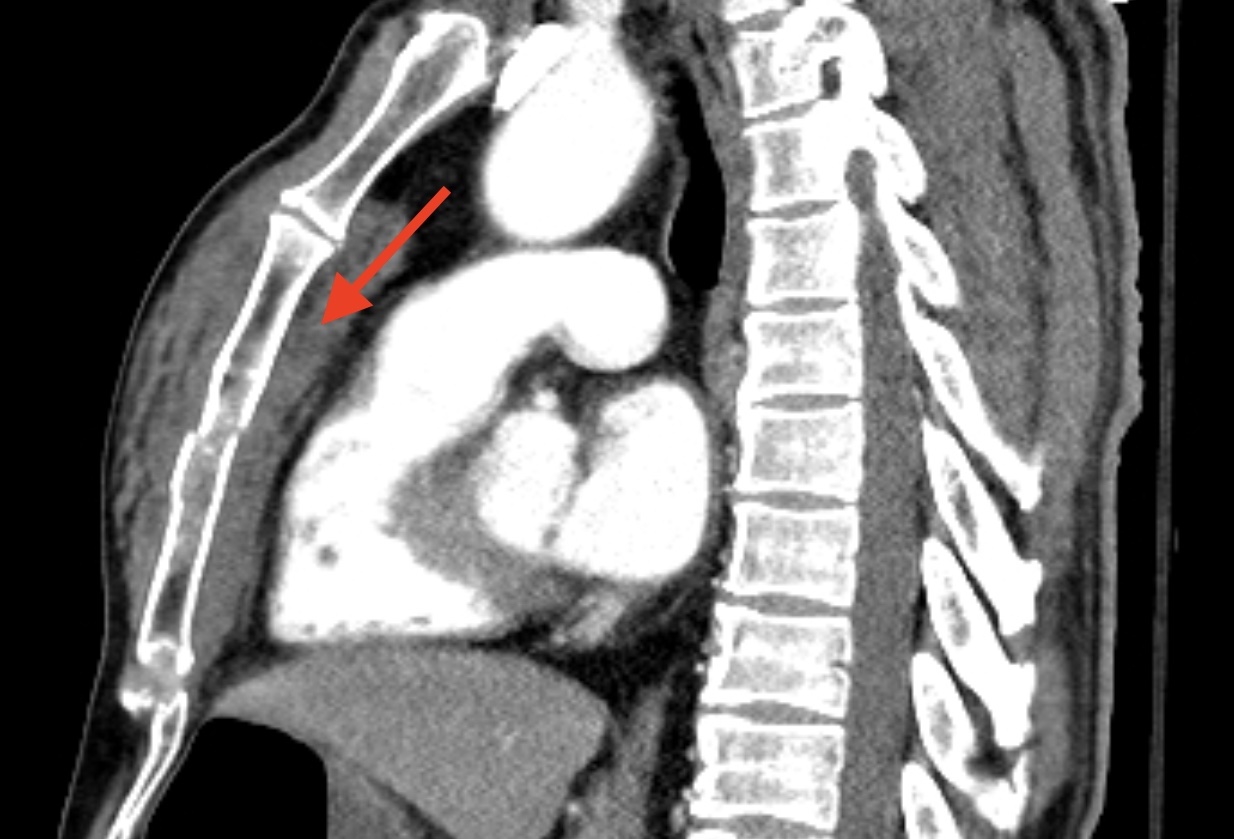
Mediastinal Hematoma Associated with Sternal Fracture
Presentation
Symptoms
- Dyspnea – The Most Common Symptom
- Airway Obstruction/Respiratory Failure
- Chest Pain
- Neck Pain
- Dysphagia
- Fatigue
- Neck/Chest Wall Hematoma
Can Cause Significant Hemorrhage and Extrapericardial Tamponade
Diagnosis
Primarily Diagnosed by CT or CTA
May See a Widened Mediastinum on Initial Plain Film Radiography (Low Sensitivity/Specificity)
Can Also Be Diagnosed by Echocardiography but is Easily Missed by a Traditional FAST with Subxiphoid View (Echocardiography is Also Unable to Clearly Differentiate Etiology Alone)
Management
Management is Primarily Directed by the Etiology and Stability
Often Managed Conservatively with Close Observation if Stable and Not Actively Bleeding
Additional Options as Appropriate
- Transcatheter Arterial Embolization (TAE)
- Open Surgical Intervention (Sternotomy vs Thoracotomy)
- Video-Assisted Thoracoscopic Surgery (VATS)