
Compartment Syndrome
Compartment Syndrome
David Ray Velez, MD
Table of Contents
Definition and Pathophysiology
Definition: Increased Tissue Pressures Cause Neurovascular Damage
Pathophysiology
- Increased Pressure Obstructs Venous Outflow (Early) and Arterial Inflow (Late)
- Causes a Reduced Capillary Perfusion Pressure
- Muscle Necrosis Occurs from the Inside-Out
Location
- Can Occur in Any Compartment
- Including Buttock (Obese After Prolonged Anesthesia), Shoulder, and Hands
- Most Common in Calf or Forearm
- Surrounding Fascia is Less Elastic than Other Muscle Compartments
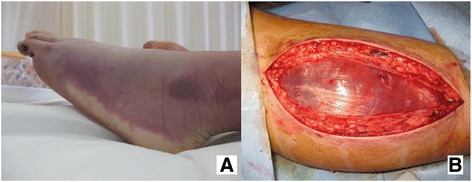
Compartment Syndrome 1
Causes
Most Common Causes: Trauma or Reperfusion Injury
Increased Compartment Mass
- Ischemic Reperfusion Injury
- Due to Inflammation and Oxidative Damage in a Previously Ischemic Site
- Oxygen Radicals Cause Increased Extravasation and Tissue Swelling
- Primary Mediator: PMN’s (Neutrophils)
- Bleeding (Fracture, Hemophilia, Anticoagulation, etc.)
- Crush Injury
- Venous Thromboembolism (VTE)
- High-Voltage Electrical Injury
- Shock
- IV Infiltration
- IV Drug Infiltration
Decreased Compartment Size
- Tight Dressings
- Casting
- Eschars from Burns
- Military Antishock Garments
Diagnosis
Symptoms (6 P’s)
- Pain – First Sign
- Paresthesia (Pins and Needles Sensation)
- Paresis (Weakness) or Paralysis (Unable to Move)
- Pallor (Pale Color)
- Poikilothermic (Cold)
- Pulseless – Late Sign
Diagnosis
- Generally a Clinical Diagnosis Based on History and Physical Exam
- Can Measure Compartment Pressures if Uncertain or Unable to Obtain a Reliable Physical Exam
- Compartment Pressure > 30 mmHg
- Gradient Between Diastolic and Compartment Pressure < 30 mmHg
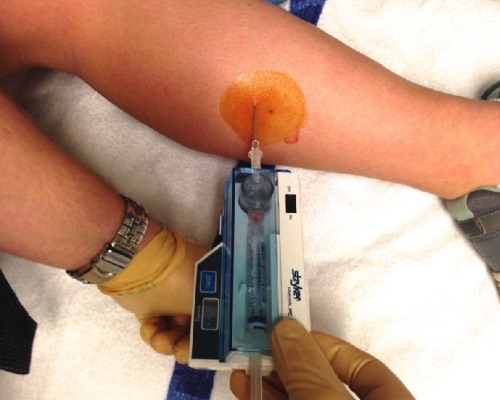
Measuring Compartment Pressure 2
Treatment
Primary Treatment: Emergent Fasciotomy
Prophylactic Fasciotomy Indications
- Ischemia > 6 Hours
- High Risk Injury:
- Combined Arterial/Venous Injury
- Complex Extremity Fractures
- Arterial or Venous Vascular Ligation
- Significant Crush Injury
References
- Okada Y, Narumiya H, Ishi W, Ryoji I. Lower limb ischemia caused by resuscitative balloon occlusion of aorta. Surg Case Rep. 2016 Dec;2(1):130. (License: CC BY-4.0)
- Bresnahan JJ, Hennrikus WL. Chronic Exertional Compartment Syndrome in a High School Soccer Player. Case Rep Orthop. 2015;2015:965257. (License: CC BY-3.0)